California Real Estate Appraisers
Buying a condo in California is exciting. But before you get the keys, your lender will send someone to check the home’s true value. That person is a real estate appraiser.
Finding the right appraiser can feel confusing, especially for condos. Condos have HOA rules, shared walls, and special paperwork that houses don’t have. This guide breaks it all down into simple steps, so you know exactly what to look for and what to expect.
Key Takeaways for Condo Buyers
- Most buyers don’t pick their own appraiser — the lender orders one for you.
- Look for state licensing, condo experience, and local market knowledge.
- Condo appraisals need extra paperwork, like HOA budgets and reserve reports.
- A low appraisal isn’t the end of your deal. You have options.
- A good Long Beach real estate agent can guide you through the whole process.
What Is a Real Estate Appraiser?
A real estate appraiser is a licensed professional who figures out how much a property is worth. Lenders use this number to decide how much money they’ll loan you. The appraiser visits the condo, checks its condition, and compares it to similar homes that sold nearby.
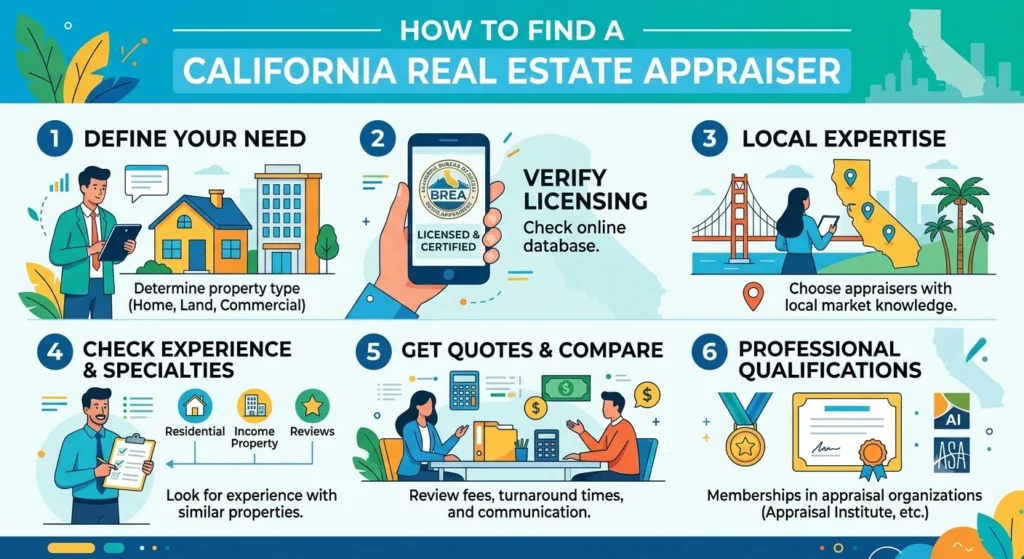
9 Steps to Find the Right California Real Estate Appraiser
1. Understand Who Actually Picks the Appraiser
Here’s something many buyers don’t know: you usually don’t choose your own appraiser. Lenders use a neutral system called an Appraisal Management Company, or AMC. This keeps the process fair and unbiased. Your job isn’t to hire the appraiser — it’s to understand the process and prepare for it.
2. Check for a Valid California License
Every appraiser working in California must hold a license from the Bureau of Real Estate Appraisers (BREA). There are a few license levels, and higher levels mean more training and experience. You can search any appraiser’s license status on the BREA website before trusting their report.
3. Look for Condo-Specific Experience
Condos are appraised differently than single-family homes. An appraiser needs to understand:
- Shared walls and common areas
- HOA fees and rules
- Building age and reserve funds
- Recent condo sales in the same complex
An appraiser with strong condo experience will spot value details that a house-focused appraiser might miss.
Why Condo Comps Matter So Much
Appraisers rely on comparable sales, or “comps.” For condos, the best comps often come from the same building or complex. If your building hasn’t had many recent sales, the appraiser may need to look at nearby complexes with similar size, age, and amenities. This takes extra skill, so experience matters here.
4. Ask About HOA Document Familiarity
Condo appraisals almost always require HOA paperwork, including:
- The HOA budget
- Reserve study reports
- HOA bylaws or CC&Rs
- Master insurance policy details
A skilled appraiser knows how to read these documents and factor them into the final value. This is one of the biggest differences between condo and single-family home appraisals.
5. Ask Your Lender for a Local Appraiser Panel
Some lenders can pull from a local pool of licensed appraisers who know your specific California market. Ask your loan officer if this is available. Local knowledge matters, especially in cities like Long Beach, where condo pricing can shift block by block.
6. Review Their Turnaround Time
Ask how long the appraisal usually takes. Most on-site visits take 30 minutes to 2 hours. After that, it typically takes 3 to 7 business days to get the full written report. If your closing date is tight, this timeline matters.
7. Confirm They Understand Special Appraisal Types
Not every appraisal is for a purchase. If you’re dealing with any of the following, make sure your appraiser has specific experience in that area:
- VA loan appraisals for military buyers and veterans, which follow extra guidelines set by the VA. Learn more about the free VA loan appraisal process for eligible buyers.
- Date of death appraisals, used to set a property’s value for estate or inheritance purposes. These are different from a standard purchase appraisal. Read more about date of death appraisals here.
- Probate appraisals, needed when a home is sold through the court system after someone passes away. Learn how these work in our guide to probate real estate sales in Long Beach.
8. Ask What Happens If the Value Comes in Low
A low appraisal can be stressful, but it doesn’t have to end your purchase. Buyers usually have a few options, including renegotiating the price, paying the difference in cash, or challenging the report with better comps. Our full breakdown on Long Beach home pricing and the appraisal walks through each choice step by step.
9. Lean on a Local Real Estate Agent for Guidance
You don’t have to figure this out alone. A trusted local agent has worked with dozens of appraisers and knows how condo valuations typically play out in your market. They can help you prepare for the appraisal, understand the report, and plan your next move if the number comes in lower than expected.
How Condo Buyers Can Prepare for the Appraisal
- Gather your HOA documents early, including the budget and reserve study.
- Make a list of any recent upgrades in the unit.
- Keep the unit tidy and accessible for the visit.
- Ask your agent for recent comps in the building or complex.
- Stay in touch with your lender about the timeline.
Ready to Buy or Sell a Condo in California?
Choosing the right team matters just as much as choosing the right appraiser. If you’re buying or selling in Long Beach, contact Jay Valento at 562-413-7655. To find the right agent to represent you, visit RedWagonTeam.com.
Frequently Asked Questions About Finding a California Real Estate Appraiser
Do I get to choose my own appraiser?
No, in most cases you don’t. Lenders use appraisal management companies to assign a neutral, licensed appraiser. This keeps the process fair for everyone involved.
How much does a condo appraisal cost in California?
Condo appraisals typically cost between $500 and $900, though the price can go up for larger units or complex buildings. The buyer usually pays this cost as part of closing fees.
Why do condo appraisals take extra paperwork?
Condos involve shared ownership, so appraisers need HOA budgets, reserve reports, and bylaws to understand the full financial health of the building. This helps them judge risk and value accurately.
What if my building doesn’t have recent condo sales?
The appraiser can use comps from similar nearby complexes. They’ll look at unit size, age, amenities, and location to find the closest match possible
Can I check if an appraiser is licensed in California?
Yes. You can look up any appraiser’s license status through the California Bureau of Real Estate Appraisers website. This confirms they’re qualified to complete your report.
What happens if the appraisal comes in lower than my offer?
You have choices. You can renegotiate the price with the seller, pay the difference yourself, or ask for a reconsideration of value with new comparable sales. A local agent can help you decide the best path.
Should I get a second appraisal if I disagree with the first one?
You can request a reconsideration of value through your lender, which usually needs new supporting data. In some cases, ordering a second independent appraisal is worth the cost, especially for a big purchase like a condo.
.